
1. General workshop rules
-
Safety is everyone's responsibility.
-
All members must follow workshop safety instructions.
-
Members must familiarise themselves with the location of emergency exits, fire extinguishers and first-aid equipment.
-
No member should operate machinery unless they have received appropriate instruction and been authorised to use it.
-
Visitors and new members must be made aware of the workshop rules.
-
Never use machinery if you are tired, unwell or under the influence of alcohol or drugs.
-
Horseplay, practical jokes and distracting people operating machinery are strictly prohibited.
-
Report any unsafe conditions, damaged equipment or accidents to the workshop supervisor.
-
Never work alone unless specifically authorised under the Shed's lone-working arrangements.

2. Personal safety and clothing
-
Wear appropriate clothing for workshop activities.
-
Avoid loose clothing, ties, scarves and jewellery that could become caught in machinery.
-
Long hair must be tied back or secured.
-
Wear suitable footwear, preferably safety footwear.
-
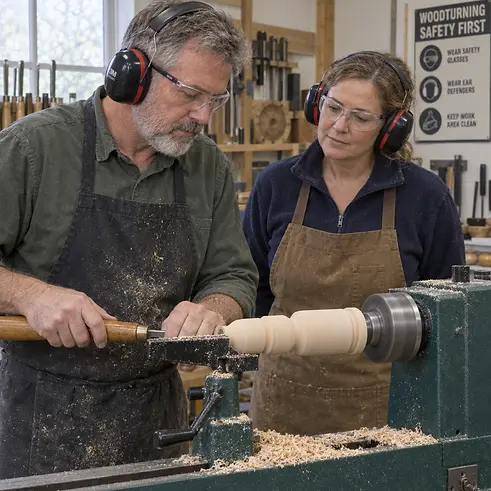
Safety glasses or other suitable eye protection must be worn when required.
-
Use hearing protection when operating noisy machinery.
-
Wear suitable respiratory protection when required, particularly when dealing with wood dust.
-
Do not wear gloves when operating machinery where they could become caught in rotating or moving parts.
3. Machinery safety
-
Only trained and authorised members may operate machinery.
-
Never operate a machine without understanding how it works.
-
All guards and safety devices must be in place and functioning.
-
Never remove or bypass machine guards.
-
Check machinery before use and report defects immediately.
-
Ensure emergency stop buttons are accessible.Use the correct machine and accessories for the job.
-
Never adjust, clean or clear a machine while it is running.
-
Always isolate machinery from its power supply before changing blades, cutters or carrying out maintenance.
-
Never leave operating machinery unattended.
-
Use push sticks, push blocks and appropriate work-holding devices where necessary.
-
Keep hands away from cutting areas and moving parts.
-
Do not attempt to stop rotating blades or cutters by hand.


4. Dust extraction and ventilation
-
Use dust extraction equipment whenever appropriate.
-
Ensure extraction systems are switched on before starting machinery.
-
Never allow excessive accumulations of sawdust or wood shavings.
-
Clean floors and work surfaces regularly.
-
Do not use compressed air to blow dust from clothing or work areas.
-
Wear appropriate respiratory protection when required.
-
Keep the workshop adequately ventilated.
-
Report any faults with dust extraction equipment.
5. Housekeeping and general cleanliness
-
Keep walkways and emergency exits clear.
-
Return tools and equipment to their designated storage places.
-
Clean up spills immediately.
-
Remove offcuts and waste materials regularly.
-
Keep electrical cables tidy and away from walkways.
-
Never leave tools or materials where they could cause someone to trip.
-
Ensure workbenches are left clean and tidy after use.

-
-
6. Electrical safety
-
Do not use damaged plugs, cables or electrical equipment.
-
Report electrical faults immediately.
-
Never attempt electrical repairs unless qualified and authorised.
-
Avoid overloading electrical sockets or extension leads.
-
Switch off equipment after use.
-
Portable electrical equipment must be maintained and inspected under the Shed's electrical safety arrangements.
7. Fire safety
-
Know the location of fire extinguishers and fire alarm equipment.
-
Keep fire exits clear at all times.
-
Do not smoke or vape inside the workshop.
-
Dispose of oily rags and other potentially combustible materials safely.
-
Keep combustible materials away from heaters and other ignition sources.
-
Switch off machinery and electrical equipment when not required.
-
Report any fire hazards immediately.
-
Know the procedure for raising the alarm and evacuating the building.
8. First aid and accidents
-
Know who the appointed first-aiders are.
-
Know where the first-aid kit is located.
-
All accidents, injuries and near misses must be reported, however minor.
-
Record incidents in the workshop accident book or incident reporting system.
-
Do not attempt to operate machinery or continue working if injured.
-
In an emergency, call 999 where appropriate.
-
Make sure the workshop address is readily available for emergency services.
9. Working with other members
-
Be considerate of other members working nearby.
-
Do not distract anyone operating machinery.
-
Ask for assistance when lifting heavy or awkward materials.
-
Use appropriate lifting techniques.
-
Never assume another member knows how to operate a particular machine.
-
Encourage new members to ask questions and seek assistance.
-
Stop work if you believe an unsafe situation is developing.
10. Visitors and new members
-
All visitors must be accompanied by an authorised member.
-
New members must receive a workshop induction before undertaking practical work.
-
New members must be supervised until they have demonstrated the necessary skills.
-
No visitor may operate machinery without appropriate instruction and authorisation.
-
Children and young visitors must be subject to specific supervision and risk assessment arrangements.
11. Hand tools and portable power tools
-
Check hand tools before use and do not use damaged tools.
-
Use the correct tool for the job.
-
Keep cutting tools sharp and properly maintained.
-
Secure workpieces before drilling, sawing or sanding.
-
Ensure portable power tools are in good condition.
-
Disconnect tools from the electrical supply before changing blades, bits or accessories.
-
Do not leave portable power tools connected when unattended.
-
Store tools safely after use.
12. Manual handling
-
Avoid lifting heavy objects unnecessarily.
-
Ask another member for assistance with heavy or awkward items.
-
Use trolleys or other lifting aids where available.
-
Keep your back straight and avoid twisting while lifting.
-
Do not attempt to move heavy machinery without appropriate assistance.
-
Report any injury or discomfort resulting from lifting.
13. Member responsibilities
Every member has a responsibility to help maintain a safe and welcoming workshop.
Members are expected to:
-
Read and comply with the workshop safety rules.
-
Attend the workshop induction.
-
Follow instructions given by the workshop supervisor.
-
Use equipment only when authorised.
-
Look after shared tools and machinery.
-
Report accidents, near misses and unsafe conditions.
-
Help maintain a clean and orderly working environment.
-
Look out for the safety of fellow members.
Remember: If you are unsure about anything, STOP and ASK before proceeding.
14. Workshop management responsibilities
I would include a short section explaining that safety is not solely the responsibility of individual members.
The Shed's management committee or appointed workshop safety officer should ensure that:
-
Suitable risk assessments are maintained.
-
Machinery is properly guarded, inspected and maintained.
-
Machine-specific operating instructions are available.
-
Members receive appropriate induction, training and supervision.
-
Authorisation to use machinery is recorded.
-
Dust extraction equipment is maintained and inspected.
-
First-aid facilities are available.
-
Fire safety arrangements are maintained.
-
Accidents and near misses are recorded and reviewed.
-
Safety rules are reviewed regularly.
15. Emergency procedures
Every member should know what to do in an emergency.
In the event of an emergency
-
Stop work and switch off machinery if safe to do so.
-
Raise the alarm and alert other members.
-
Call 999 if emergency assistance is required.
-
Evacuate the building using the nearest safe exit.
-
Assemble at the designated meeting point.
-
Do not re-enter the building until authorised.
Important workshop information
-
First-aid kit location: To be completed
-
Fire extinguishers: To be completed
-
Emergency exits: To be completed
-
Assembly point: To be completed
-
Workshop emergency contact: To be completed
16. Important supporting documents
I would recommend that the website also provides access to supporting safety documents, rather than expecting the general rules to cover everything.
These could include:
Document
Purpose
Workshop risk assessment
Identifies general workshop hazards
Machine risk assessments
Covers individual machines
Machine operating instructions
Explains safe operating procedures
Member induction checklist
Confirms new members have been inducted
Machine authorisation register
Records who can operate each machine
Accident and near-miss form
Records incidents
Fire evacuation procedure
Explains emergency arrangements
COSHH assessments
Covers dust, paints, adhesives and chemicals
Equipment maintenance register
Records inspections and maintenance
A few important points for Men in Sheds
There are some particular considerations I would emphasise for a community woodworking organisation.
1. Training and authorisation
Do not assume that somebody who has used a table saw or bandsaw elsewhere is automatically competent to use the Shed's equipment. Each machine should have an appropriate induction and competency assessment. HSE recommends recording machine authorisation in writing.
HSE+1
2. Wood dust
This deserves particular attention. Wood dust is not simply a housekeeping problem; it can cause serious respiratory illness. Proper extraction, suitable cleaning equipment and appropriate respiratory protection are important. HSE recommends competent examination of local exhaust ventilation equipment at least every 14 months.
HSE+1
3. Gloves
Avoid a blanket rule requiring gloves in a woodworking workshop. They can create entanglement hazards around rotating machinery. Follow the individual machine's risk assessment and operating instructions.
4. Volunteers and legal responsibilities
Although Men in Sheds is a voluntary organisation, it should not assume that health and safety legislation does not apply. Responsibilities depend on the organisation's activities, employment arrangements and control of the premises and equipment.
The management committee should ensure that appropriate risk assessments and safe systems of work are in place.
Recommended HSE resources
I would include a small section of external links at the bottom of your website page:
My recommendation for your website
I would finish the page with a prominent statement:
SAFETY FIRST – EVERY TIME
Think Safe. Work Safe. Go Home Safe.
We want Men in Sheds to be an enjoyable, friendly and safe place for everyone. Please look after yourself, your fellow members and our shared workshop.
I would also suggest displaying the date the rules were last reviewed and having members confirm that they have read them.